Produkter
Tankekart programvare
Disposisjon
Gantt-kartprogramvare
Bruker
Tankekart for utdanning
Tankekart for bedrifter
Tankekart for personlig utvikling
Fordeler med tankekartlegging
Ressurser
Funksjoner
Utdanning
Personlig og arbeid
Desktop
Video Tutorials
Watch tips and tricks about using Mindomo.
Help Center
Detailed help guide on configuring and using Mindomo.
Artikler
Hva er et tankekart?
How to Mind Map?
How to Take Notes with Mind Maps?
How to Prioritize Tasks with Mind Maps?
What is a Concept Map?
Top 29 Mind Map Examples
Priser
Logg inn
Registrer deg
Produkter
Tankekart programvare
Disposisjon
Gantt-kartprogramvare
Bruker
Tankekart for utdanning
Tankekart for bedrifter
Tankekart for personlig utvikling
Fordeler med tankekartlegging
Artikler
Hva er et tankekart?
How to Mind Map?
How to Take Notes with Mind Maps?
How to Prioritize Tasks with Mind Maps?
What is a Concept Map?
Top 29 Mind Map Examples
Funksjoner
Utdanning
Personlig og arbeid
Desktop
Hjelp
Video Tutorials
Help Center
Priser
Registrer deg
Logg inn
Kategorier:
Alle
av
Nieves Muñoz Haro
8 år siden
225
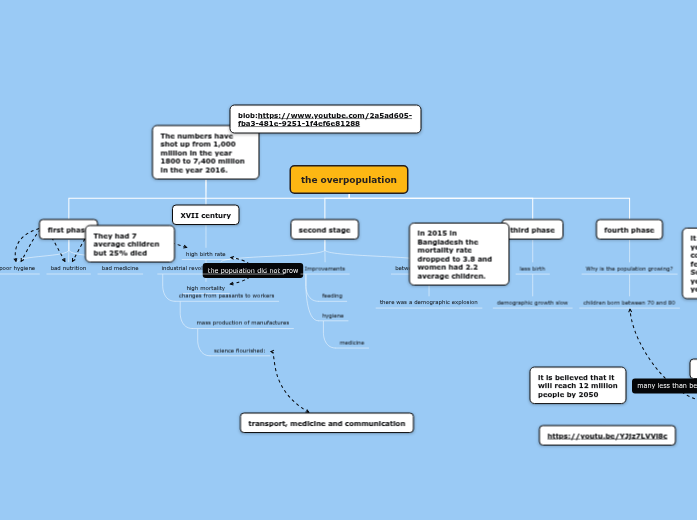
the overpopulation
Åpne
in 2015 in Bangladesh the mortality rate dropped to 3.8 and women had 2.2 average children.
https://www.youtube.com/watch?v=5x3MLNuj_Jg
https://youtu.be/YJjz7LVVl8c
blob:https://www.youtube.com/2a5ad605-fba3-481e-9251-1f4ef6e81288
it is believed that it will reach 12 million people by 2050
it took more than 80 years for developed countries to reduce fertility, Malaysia and South Africa took 34 years, Bangladesh 20 years, Iran 20 years.
They had 7 average children but 25% died
average 2.5 and it was 5 40 years ago
they are having children
transport, medicine and communication
The numbers have shot up from 1,000 million in the year 1800 to 7,400 million in the year 2016.
XVII century
high birth rate
high mortality
the overpopulation
fourth phase
Why is the population growing?
children born between 70 and 80
third phase
less birth
demographic growth slow
second stage
between 1750 and 1850
there was a demographic explosion
Improvements
hygiene
medicine
feeding
industrial revolution in the united kingdom
changes from peasants to workers
mass production of manufactures
science flourished:
first phase
bad medicine
bad nutrition
poor hygiene