
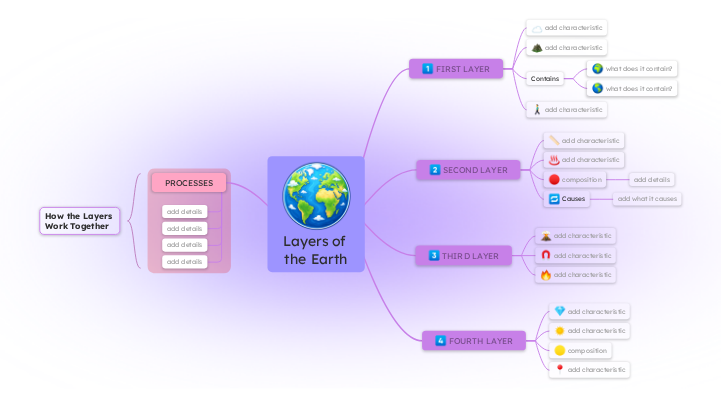
This interactive mind map template helps students learn about the layers of the Earth. Identify the four main layers, describe their characteristics and composition, and explore the processes that occur inside our planet. Use the interactive hints and suggestions to complete the mind map and test your knowledge of Earth's structure. Use this layers of the Earth template to learn how our planet is built, from the ground beneath our feet to its very center. The Earth has four main layers: Add details about each layer, such as its thickness, composition, temperature and state, to compare them and remember how they work together. Use this interactive template to learn about Earth's four main layers, from the surface to its center. Complete this section with processes connected to the Earth's layers. Replace each 'add details' placeholder with one short cause-and-effect statement. Use the suggestions for ideas, or add your own examples. Describe how heat from Earth's deep interior moves toward the outer layers. Describe the role of Earth's magnetic field, which is generated mainly by moving liquid metal in the outer core. Describe a process involving magma or volcanic activity. Describe one process driven by movement or heat within Earth. Express it as a short cause-and-effect statement. Choose the correct name for the fourth layer of the Earth from the options below. Describe the pressure deep inside Earth and how it affects this layer's physical state. Replace 'composition' with the materials found in this layer. You can add more details with Notes. Compare the temperature of this layer with the other layers. Describe the physical state and position of Earth's center. Choose the correct name for the third layer of the Earth from the options below. Add a temperature-related characteristic. Use a qualitative statement or a temperature range from your textbook. Describe an important effect produced by motion in this layer. Describe the main materials and physical state of this layer. Choose the correct name for Earth's second layer from the options below. Explain an effect of the mantle's slow movement. Add the consequence in the empty child topic. Name one effect of mantle movement on Earth's crust. You can elaborate using Notes. Replace 'composition' with a short phrase describing this layer's material and physical behavior. Use the child topic to add a more precise term or explanation. Add a detail about the layer's rock material or related molten material. Be precise: most of the mantle is solid rock, although some rock can partially melt to produce magma. Explain its temperature or how heat affects the rock. Describe this layer's size or thickness relative to the other layers. Choose the correct name for the first layer of the Earth from the options below. Add one more important characteristic, for example how this layer relates to living things. Identify what is found on this layer. Use the empty topics below to add separate examples; keep or remove examples according to your lesson. Enter another example of what the outer layer contains. You can add more topics if needed. Enter one example of what the outer layer contains, such as a landform. Write the answer directly in this topic. Describe the material and physical state of this layer. Describe how thick this layer is compared with the others. Keep your answer short and specific. Le mappe mentali aiutano a fare brainstorming, a stabilire relazioni tra i concetti, a organizzare e generare idee. Tuttavia, i modelli di mappe concettuali e mentali vuote offrono un modo più semplice per iniziare, in quanto sono strutture che contengono informazioni su un argomento specifico con istruzioni guida. In sostanza, i modelli di mappe mentali garantiscono la struttura che combina tutti gli elementi di un argomento specifico e servono come punto di partenza per la tua mappa mentale personale. Sono una risorsa che fornisce una soluzione pratica per creare una mappa mentale su un particolare argomento, sia per il lavoro che per l'istruzione. Mindomo offre modelli di mappe mentali intelligenti che consentono di lavorare e pensare senza sforzo. È possibile scegliere tra una varietà di modelli di mappe concettuali dagli account aziendali o educativi di Mindomo, oppure creare i propri modelli di mappe mentali da zero. Qualsiasi mappa mentale può essere trasformata in un modello di mappa concettuale aggiungendo ulteriori note guida a uno dei suoi argomenti.Layers of the Earth
Informazioni su questo modello
Layers of the Earth
How the Layers Work Together
Layers of the Earth
Replace each numbered layer placeholder with the correct layer name, then complete its characteristics, composition, and effects.
Use the suggested ideas within each branch when helpful, or write answers in your own words. Finish by explaining the processes connected to Earth's interior.
Add your lesson notes or an explanation here and link to a trusted Earth-science resource if needed.
Tip: The four numbered branches are fill-in topics. Type each layer name directly into its placeholder instead of adding new branches.PROCESSES
Add explanations or examples in Notes and attach a reliable science resource if useful.FOURTH LAYER
❗Only one answer is correct for this position.
Replace the placeholder with your choice, then add details about its characteristics, composition, and conditions in the subtopics.THIRD LAYER
❗Only one answer is correct for this position.
Replace the placeholder with your choice, then complete the subtopics with details about its materials, physical state, and properties.SECOND LAYER
❗Only one answer is correct for this position.
Replace the placeholder with your choice, then add more details about its characteristics, composition, and effects in the subtopics.Causes
add what it causes
composition
add details
FIRST LAYER
❗Only one answer is correct for this position.
Replace the placeholder with your choice, then use the subtopics to describe its characteristics and contents.Contains
what does it contain?
add characteristic
Perché utilizzare un modello di mappa concettuale Mindomo?
Un modello ha diverse funzionalità:
-
Prodotti
-
Usi
- Usi generali
- Mappe concettuali per l'educazione
- Mappe concettuali per le Aziende
- Mappe concettuali per la Crescita Personale
- Tecnologia Assistiva
- Collaborazione di team
- Brief di campagna per marketer
- Workshop di scoperta del cliente per consulenti
- Percorsi di onboarding per HR e L&D
- Gestione della conoscenza
- Matrice delle competenze del team
- Libreria dei progetti
- Ruoli
- Marketer
- HR e L&D
- Consulenti
- Gestione dei progetti
- Pianificazione delle campagne marketing
- Rollout della formazione dei dipendenti
- Ambito di lavoro
- Organizzazione delle idee
- Alberi dei problemi
- Analisi dei bisogni formativi
- Vantaggi della Mappa Concettuale
-
Soluzioni
- Guide
- Creare presentazioni con le mappe concettuali
- Come imparare con le mappe concettuali
- Pianificare e organizzare con le mappe concettuali
- Come dare priorità ai compiti con le mappe concettuali
- Prendere appunti con le mappe concettuali
- Storie reali dei clienti
- Scalare contenuti formativi per 11.000 medici
- Flusso di lavoro di team: dalla prova a indispensabile in due mesi
- 10 anni senza slide: ripensare le lezioni di architettura
- Leggi tutte le storie
-
Risorse
- Le basi
- Cos'è una mappa mentale?
- Top 29 Esempi di Mappe Mentali
- Programmi per fare Mappe Concettuali
- Come creare un diagramma di Gantt
- Guide e Supporto
- Video tutorial
- Centro assistenza
- Forum
- Esempi e modelli
- Come fare una mappa concettuale?
- Modelli di Diagrammi
- Esempi di Mappe Concettuali
- Programma per Diagrammi di Gantt
- Pagine funzionalità
- Istruzione
- Compiti per insegnanti
- Lavoro e Personale
- Desktop
- Il blog di Mindomo
- Prezzi
- Accedi
- Registrati
- Dashboard
Vantaggi della Mappa Concettuale
Perché il pensiero visivo rende più facile ricordare e pianificare.
Le basi
Guide e Supporto
Esempi e modelli
Pagine funzionalità
 Blog
Il blog di Mindomo
Guide, esempi e ricerche sul pensiero visivo.
Sfoglia tutti gli articoli


