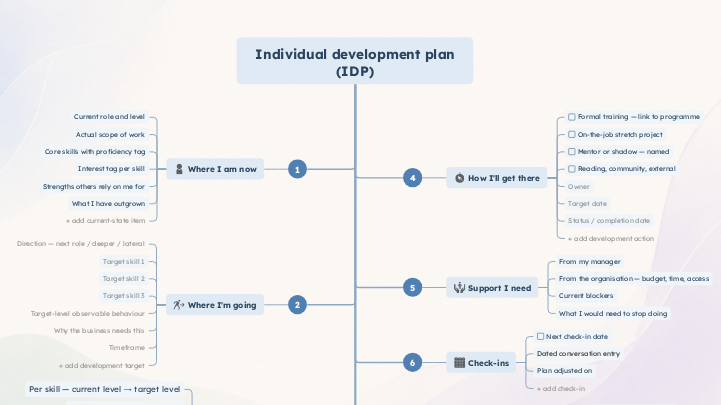
Map current role, target skills, and the gap between them in one structured plan with this Individual Development Plan (IDP) HR template. Designed for HR teams, managers, and learning and development professionals, this template helps document current proficiency levels and interests, define target skills with observable behaviours, plan development actions across formal training, stretch projects, and mentoring, agree the support and budget required, and record evidence as proficiency improves. Use it to run development conversations, keep growth plans realistic with built-in prioritisation rules, schedule check-ins, connect individual goals to business needs, and support career progression, internal mobility, and retention. This individual development plan template helps employees, managers, HR teams, and L&D professionals create a clear, structured roadmap for professional growth. It brings together career goals, development priorities, strengths, skill gaps, learning activities, support needs, and success measures in one visual workspace. Use this template to set short- and long-term goals, define actionable development steps, assign target dates, track progress, and prepare for regular review conversations. It supports career planning, performance development, upskilling, leadership growth, and internal mobility by making each employee’s development journey clear and easy to follow. Use one copy per employee and review period. The employee drafts branches 1, 2, and 5; the employee and manager agree branches 3, 4, 6, and 7. The manager confirms priorities, resources, responsibilities, and sign-off. HR or L&D owns the shared guidance in branches A and B. This template uses four assessed levels plus level 0 for not yet assessed. Adapt the labels to your organisation's competency framework, use them consistently, and apply them only for purposes permitted by your HR policy. Before publishing this template, HR should link or attach the organisation's approved proficiency, calibration, privacy, and permitted-use guidance. When employee and manager ratings differ, record both, compare the evidence, and follow the organisation's calibration process. Do not force agreement without reviewing the evidence. Write what good looks like at the chosen target level in branch 2 for each skill. Choose a realistic target level for each priority skill based on the development goal, role needs, evidence, and available time. Not every skill needs the highest level. Record the baseline level and supporting evidence when the plan begins. If the baseline is later corrected, retain the reason and date of the change. Example scale: 0 — not yet assessed; 1 — foundational, needs guidance; 2 — developing, applies with some support; 3 — proficient, works independently; 4 — advanced, can guide others and improve practice. Replace these labels if your organisation has an approved scale. Diagnose the underlying gap before selecting an intervention. List known blockers. Select the most appropriate response: formal learning, guided practice, stretch work, coaching or mentoring, job aids, process or resource changes, or a combination. Explain why it fits the diagnosed gap. Use the definitions in branch A — Proficiency scale. Example: Developing → Independent. Record evidence for the current level and the observable outcome required for the target level. Choose a development direction, not only a future job title; deeper expertise or a lateral move can also be valid. Set the target timeframe. Explain how this development objective supports the role, team, customer, or organisational priorities. For each target skill, describe observable behaviour or work output that would demonstrate the selected target level. Name the third target skill. Name the second target skill. Name the first target skill. Choose one direction and describe it. The employee completes this branch first and discusses it with the manager. Add work, responsibilities, or routines you have outgrown. Add a strength others regularly depend on. Use a consistent set of tags, for example: growing / maintaining / deprioritising. Add a core skill and tag its proficiency level using branch A — Proficiency scale. Include observable evidence for the selected level. Describe the work you actually own. Enter current role and level. Use this branch to confirm that the plan fits within the time and resources realistically available during the review period. When allocated hours exceed capacity, remove or defer targets and activities rather than assuming more time will appear. Use a suitable mix of experience, social learning or coaching, and formal learning. The 70:20:10 model can be a planning prompt, but its ratios are not mandatory targets; choose methods based on the goal, context, evidence, and available support. Assign monthly hours to the primary and secondary skills so the total can be compared with available capacity. As a default, add no more than two secondary skills so the primary goal remains adequately resourced. Adjust only when capacity and organisational guidance support it. Choose one target skill that receives most of the available development time and attention. Agree the number of hours that can genuinely be protected each month after normal workload and recurring commitments. Use relevant evidence from more than one source where possible, such as work outputs, observed behaviour, feedback, metrics, completed assignments, and employee reflection. List what should continue next period. Name dropped targets and the reason. Record the previous and new levels using branch A, together with the supporting evidence, reviewer, and review date. Change a level only after the evidence has been reviewed and the rating calibrated where required. Add concrete evidence for each target skill, such as a work product, observed behaviour, stakeholder feedback, a relevant metric, or a completed assignment. Add one dated entry per development check-in. Date and reason for the adjustment. Date — what moved / what stalled / what changed. Set the next check-in date. The employee leads the first draft; the manager discusses and responds to the requests. Name work that may need to be deprioritised. Describe what is currently in the way. List budget, protected time, access, or permissions needed. Describe the support you need from your manager. For each action, record an owner, target date, status, and expected outcome or evidence. Record the current status — not started / in progress / blocked / completed — and add the actual completion date when finished. Set the target date. Assign an owner. Add supporting resources or communities. Name the person, confirm their availability, and describe the mentoring or shadowing activity. Name a real project, scope, expected outcome, support required, and target date. Add the relevant course, workshop, certification, or learning resource and link to enrolment or programme details. Miellekarttojen avulla voit ideoida, hahmottaa käsitteiden välisiä suhteita sekä järjestää ja tuottaa ideoita. Miellekarttamallien avulla alkuun pääsee kuitenkin helpommin: ne ovat valmiita runkoja, jotka sisältävät tietoa tietystä aiheesta sekä ohjeita kartan täydentämiseen. Malli antaa rakenteen, joka kokoaa yhteen aiheen kaikki osa-alueet ja toimii lähtökohtana omalle miellekartallesi. Se on käytännöllinen tapa luoda miellekartta tietystä aiheesta niin työelämän kuin opiskelun tarpeisiin. Mindomon älykkäiden miellekarttamallien avulla ajattelet ja toimit vaivattomasti. Voit valita erilaisia miellekarttamalleja Mindomon yritys- ja koulutustileiltä tai luoda omia malleja tyhjästä. Minkä tahansa miellekartan voi muuttaa malliksi lisäämällä sen aiheisiin ohjaavia muistiinpanoja.Individual Development Plan Template
Tietoja tästä mallista
Individual development plan template
Individual development plan (IDP)
Keep the plan active throughout the review period and use check-ins to record progress and agreed changes. Use observable evidence and consistent proficiency definitions. An IDP supports development; it does not by itself guarantee promotion, a pay change, or a role change. Follow your organisation's policies for privacy, access, record retention, and performance management.A
Proficiency scale
Link proficiency policy
Record differing ratings
Define observable proof
Set target level
Set baseline once
Choose skill level
3
The gap
- Consider knowledge or skill, practice and experience, tools or process, resources, role clarity, feedback, and management support
- A gap may need formal learning, guided practice, stretch work, coaching, a job aid, a process change, or a combination
- The employee and manager should agree the gap, evidence, and proposed response+ add gap row
Blockers already known
Best development response
Per skill — current level → target level
2
Where I'm going
- Focus on one to three priority skills, adjusted to realistic capacity
- For each skill, choose a target level from branch A and define observable behaviour at that level
- Link the objective to the employee's career goals and relevant role, team, or organisational needs+ add development target
Timeframe
Why the business needs this
Target-level observable behaviour
Target skill 3
Target skill 2
Target skill 1
Direction — next role / deeper / lateral
1
Where I am now
- Rate skills using the shared proficiency scale and observable evidence
- Add an interest tag to show whether each skill is a growth, maintenance, or lower-priority area
- If a rating differs from the team skills matrix, flag it for review and calibration; do not assume either rating is automatically correct+ add current-state item
What I have outgrown
Strengths others rely on me for
Interest tag per skill
Core skills with proficiency tag
Actual scope of work
Current role and level
B
Prioritisation
Cut until it fits
Check learning-method mix
Allocate hours by skill
Maximum two secondary skills
One primary skill
Available hours per month
7
Evidence and outcomes
- Review evidence before changing a proficiency level and calibrate ratings according to organisational policy
- Record outcomes, dropped targets, and items carried forward
- Update the team skills matrix when applicable and authorised+ add evidence entry
Carry forward to next period
Targets dropped and why
Proficiency raised from → to
Evidence per target skill
6
Check-ins
- Record progress, obstacles, feedback, agreed changes, and next actions
- Keep prior entries according to your organisation's retention policy so progress can be reviewed over time
- Avoid recording sensitive personal information that is not necessary for the development plan
- Set the next check-in date before closing the map+ add check-in
Plan adjusted on
Dated conversation entry
Next check-in date
5
Support I need
- Capture practical support such as budget, protected time, access, feedback, workload changes, or permission to deprioritise work
- Distinguish support that can be agreed now from requests that need further approval
- An empty branch may mean no support is currently needed or that the discussion is incomplete; use open questions rather than assumptionsWhat I would need to stop doing
Current blockers
From the organisation — budget, time, access
From my manager
4
How I'll get there
- Choose a mix of formal, experiential, and social learning based on the goal; do not treat any fixed ratio as a requirement
- Name real projects and, with their agreement, real mentors or people to shadow
- Spread activities realistically across the review period and check dependencies in Gantt view+ add development action
Status / completion date
Target date
Owner
Reading, community, external
Mentor or shadow — named
On-the-job stretch project
Formal training — link to programme
Miksi käyttää Mindomon miellekarttamallia?
Malleissa on useita toimintoja:
-
Tuotteet
-
Käyttötarkoitukset
- Yleiset käyttötarkoitukset
- Miellekartat koulutukseen
- Miellekartat liiketoimintaan
- Miellekartat henkilökohtaiseen kehitykseen
- Apuvälineteknologia
- Tiimiyhteistyö
- Kampanjabriefit markkinoijille
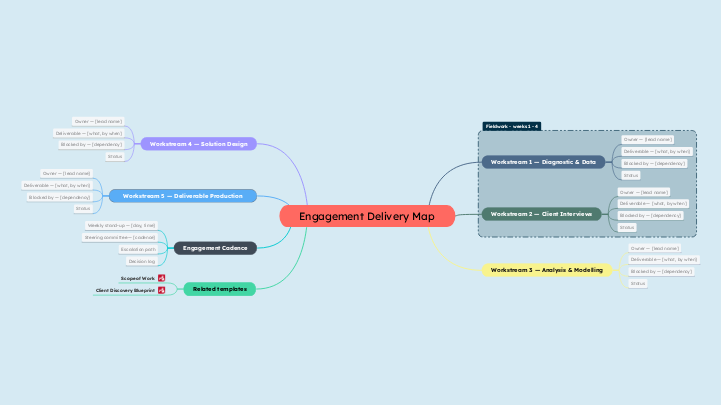
- Asiakastarpeiden kartoitustyöpajat konsulteille
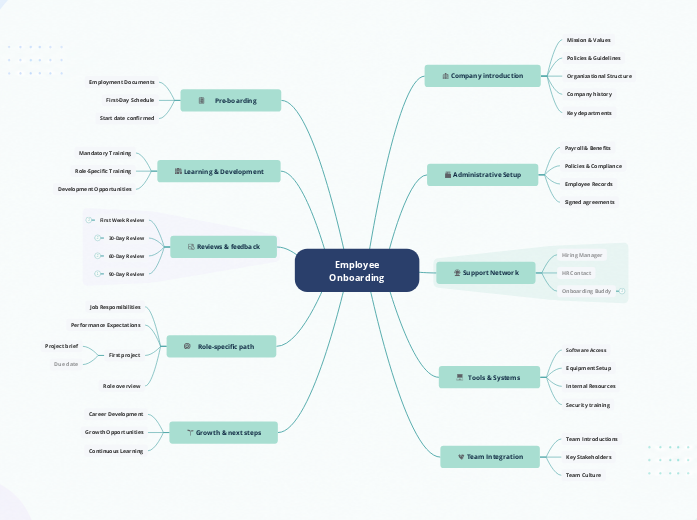
- Perehdytyspolut HR:lle ja L&D:lle
- Tietämyksenhallinta
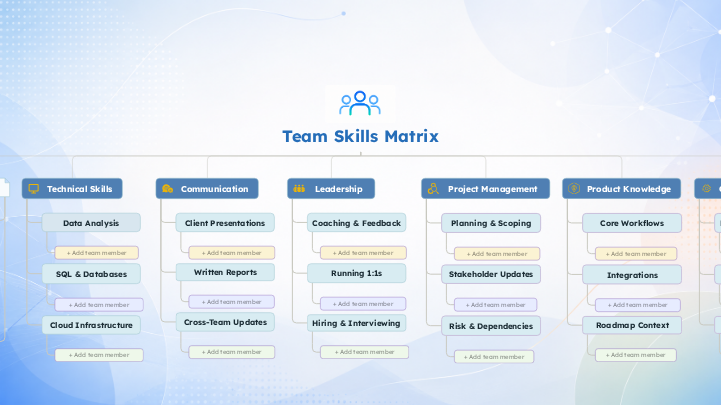
- Tiimin osaamismatriisi
- Projektikirjasto
- Roolit
- Markkinoijat
- HR ja L&D
- Konsultit
- Projektinhallinta
- Markkinointikampanjan suunnittelu
- Henkilöstökoulutusten jalkautus
- Työn laajuuden määrittely
- Ideoiden organisointi
- Ongelmapuut
- Koulutustarveanalyysi
- Miellekarttojen hyödyt
-
Ratkaisut
- Oppaat
- Tee esityksiä miellekartoilla
- Opi miellekartoilla
- Suunnittele ja järjestä miellekartoilla
- Priorisoi tehtäviä miellekartoilla
- Tee muistiinpanoja miellekartoilla
- Aitoja asiakastarinoita
- Koulutussisällön skaalaaminen 11 000 lääkärille
- Tiimin työnkulku: kokeilusta korvaamattomaksi kahdessa kuukaudessa
- 10 vuotta ilman dioja: arkkitehtuuriluennot uusiksi
- Lue kaikki tarinat
-
Resurssit
- Perusteet
- Mikä on miellekartta?
- Miten miellekartta tehdään?
- Mikä on käsitekartta?
- Miellekarttaideoita opiskeluun
- Oppaat ja tuki
- Video-oppaat
- Ohjekeskus
- Foorumi
- Esimerkit ja mallit
- 100 miellekarttaideaa
- Miellekartat apuvälineteknologiana
- 29 parasta miellekarttaesimerkkiä
- Ominaisuussivut
- Koulutus
- Opettajan tehtävät
- Työ ja vapaa-aika
- Työpöytäsovellus
- Mindomo-blogi
- Hinnoittelu
- Kirjaudu sisään
- Rekisteröidy
- Hallintapaneeli
Yleiset käyttötarkoitukset
Miellekarttojen hyödyt
Miksi visuaalinen ajattelu helpottaa muistamista ja suunnittelua.
Perusteet
Oppaat ja tuki
Esimerkit ja mallit
Ominaisuussivut
 Blogi
Mindomo-blogi
Oppaita, esimerkkejä ja tutkimusta visuaalisesta ajattelusta.
Selaa kaikkia artikkeleita
Blogi
Mindomo-blogi
Oppaita, esimerkkejä ja tutkimusta visuaalisesta ajattelusta.
Selaa kaikkia artikkeleita