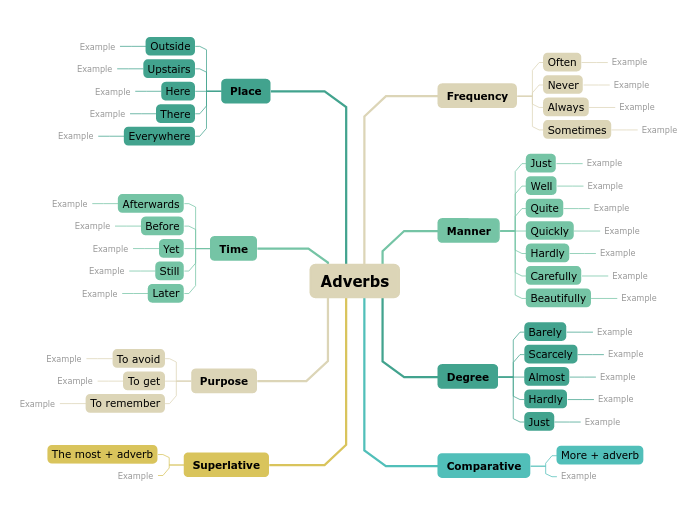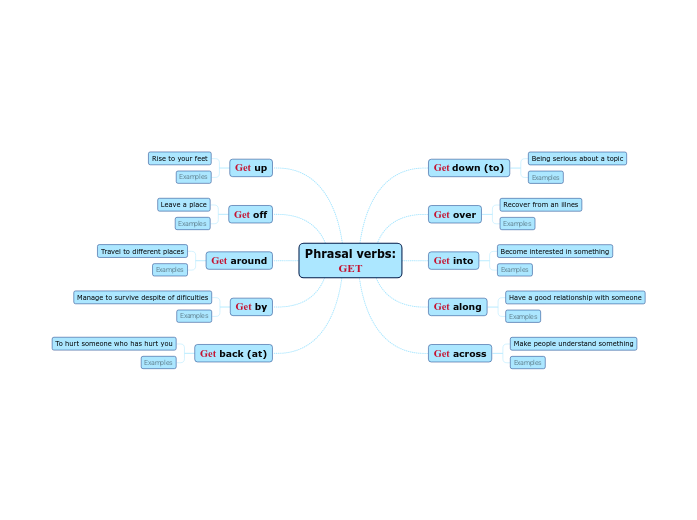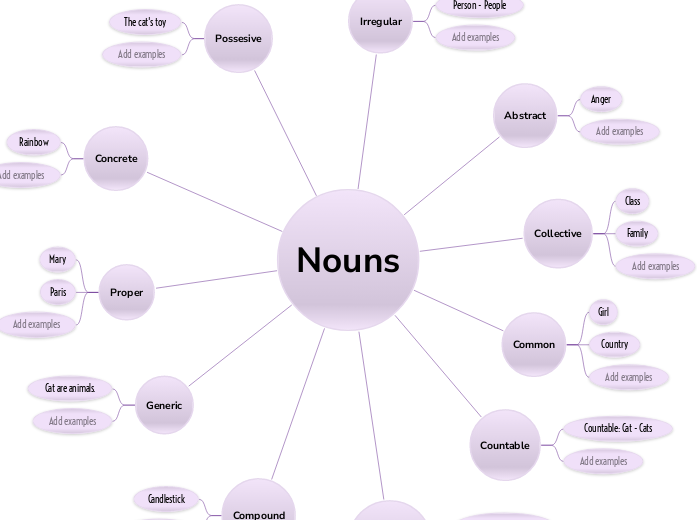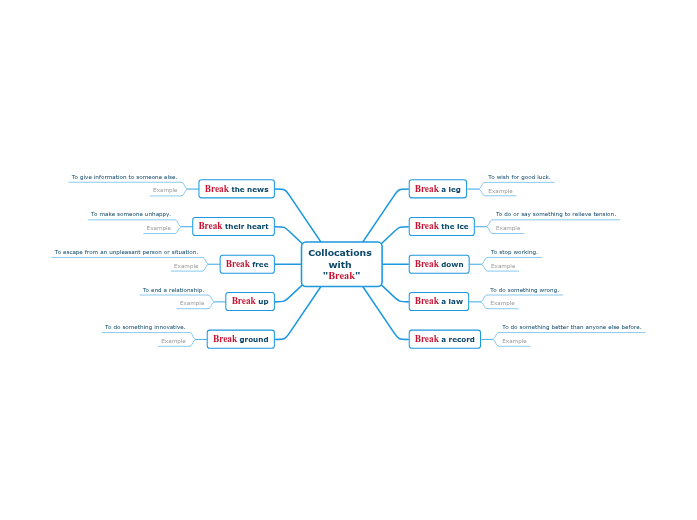
Adverbs are the parts of speech that describe verbs, adjectives, or other adverbs, phrases, clauses, or sentences. There are different types of adverbs: Adverbs of frequency Adverbs of manner Adverbs of degree Comparative adverbs Superlative adverbs Purpose adverbs Time adverbs Place adverbs Adverbs of frequency present how frequently or how often verbs happen. Some examples of adverbs of frequency are: Often Never Always Sometimes Adverbs of manner provide information about the way the verb is done. Some examples of adverbs of manner are: Just Well Quite Quickly Hardly Carefully Beautifully Adverbs of degree provide information about the level of intensity of verbs, adjectives, or other adverbs. Some examples of adverbs of degree are: Barely Scarcely Almost Hardly Just Comparative adverbs are used to show change or make comparisons. Comparative adverbs are formed by adding the word ‘more’ to adverbs. Adverbs of purpose express the reason of verbs. Some examples of adverbs of purpose are: To avoid To get To remember Adverbs of time offer information about the time when the verb takes place. Some examples of time adverbs are: Afterwards Before Yet Still Later Adverbs of place offer information about the place where the verb takes place. Some examples of adverbs of place are: Outside Upstairs Here There Everywhere Adverbs are words or expressions that modify a verb, adjective, another adverb, determiner, clause, preposition, or sentence. Adverbs typically express manner, place, time, frequency, degree, level of certainty, etc. Compares three or more things or people, usually is compounded of the words 'the most' plus adverb. Answers the question: Answers the question: Answers the question: Compares two things or people, usually is compounded of the word 'more' plus adverb. Answers the question: Answers the question: Answers the question: Write phrases as examples. Hărțile mentale vă ajută să faceți brainstorming, să stabiliți relații între concepte și să organizați și generați idei. Cu toate acestea, șabloanele de hărți mentale oferă o modalitate mai simplă de a începe, deoarece sunt modele care includ informații despre un subiect și instrucțiuni de ghidare. În esență, ele asigură structura care combină toate elementele unui subiect și servesc drept punct de plecare pentru harta mentală personală. Sunt o resursă practică pentru a crea hărți mentale pe diverse subiecte, fie în domeniul afacerilor, fie în educație. Mindomo vă oferă șabloane inteligente de hărți mentale, care vă ajută să acționați și să gândiți fără efort. Puteți alege dintr-o varietate de șabloane de hărți mentale disponibile în conturile pentru afaceri sau educaționale ale Mindomo sau puteți crea propriile șabloane de la zero. Orice hartă mentală poate fi transformată într-un șablon prin adăugarea de instrucțiuni de ghidare suplimentare la unul dintre subiectele sale.Adverbs
Adverbs
Superlative
The most + adverb
Purpose
To remember
To get
To avoid
Time
Later
Still
Yet
Before
Afterwards
Place
Everywhere
There
Here
Upstairs
Outside
Comparative
More + adverb
Degree
Almost
Scarcely
Barely
Manner
Beautifully
Carefully
Hardly
Quickly
Quite
Well
Just
Frequency
Sometimes
Always
Never
Often
Example
De ce să folosiți un șablon Mindomo de tip hartă mentală?
Un șablon are diverse funcționalități:
-
Produse
-
Utilizări
- Utilizări generale
- Hărți mentale pentru Educație
- Hărți mentale pentru Afaceri
- Hărți mentale pentru Dezvoltarea Personală
- Tehnologie Asistivă
- Colaborare în echipă
- Briefuri de campanie pentru specialiști în marketing
- Workshopuri de descoperire a clientului pentru consultanți
- Parcursuri de onboarding pentru HR și L&D
- Managementul cunoștințelor
- Matricea de competențe a echipei
- Biblioteca de proiecte
- Managementul proiectelor
- Planificarea campaniilor de marketing
- Coordonarea instruirii angajaților
- Domeniul lucrărilor
- Organizarea ideilor
- Arbori de probleme
- Analiza nevoilor de instruire
- Beneficiile Cartografierii Mentale
-
Soluții
- Ghiduri
- Creare prezentări cu hărți mentale
- Cum să înveți cu hărți mentale
- Planificare și organizare cu hărți mentale
- Cum să prioritizezi sarcinile cu hărți mentale
- Cum să creezi notițe cu hărți mentale
- Povești reale ale clienților
- Scalarea conținutului educațional pentru 11.000 de medici
- Flux de lucru în echipă: de la test la indispensabil în două luni
- 10 ani fără slide-uri: regândirea cursurilor de arhitectură
- Citește toate poveștile
-
Resurse
- Noțiuni de bază
- Ce este o hartă mentală?
- Cum se creează o hartă mentală?
- Ce este o hartă conceptuală?
- Beneficiile utilizării hărților mentale
- Ghiduri și suport
- Tutoriale video
- Centru de ajutor
- Forum
- Exemple și șabloane
- Top 29 exemple de hărți mentale
- Șabloane pentru hărți conceptuale
- Crearea de diagrame Gantt
- Pagini de funcționalități
- Educație
- Teme pentru profesori
- Profesional și Personal
- Desktop
- Blogul Mindomo
- Prețuri
- Autentificați-vă
- Înregistrați-vă
- Tablou de bord
Managementul cunoștințelor
Beneficiile Cartografierii Mentale
De ce gândirea vizuală ușurează memorarea și planificarea.
Noțiuni de bază
Ghiduri și suport
Exemple și șabloane
Pagini de funcționalități
 Blog
Blogul Mindomo
Ghiduri, exemple și cercetări despre gândirea vizuală.
Vezi toate articolele
Blog
Blogul Mindomo
Ghiduri, exemple și cercetări despre gândirea vizuală.
Vezi toate articolele