
Problem type
1 topicProblem type
Describe the problem type Select the problem type or enter your own description. Create something new Change something Fix something broken
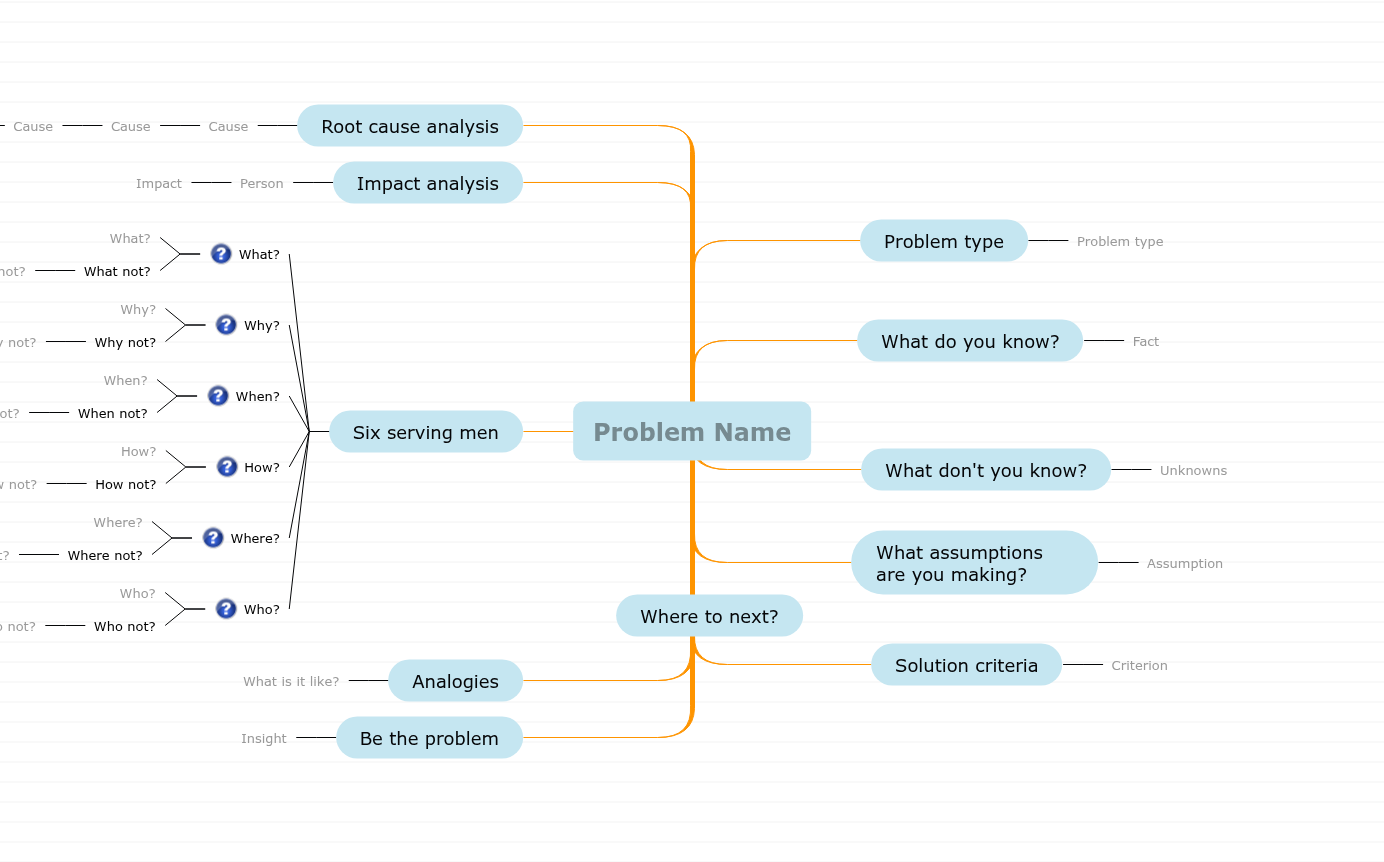
Researching and describing a problem is the foundation for solving it. This mind map takes you through a range of techniques for constructively and comprehensively describing a problem, before searching for solutions.
Free with a Mindomo account. Opens your own copy in the editor.
Enter your problem's name and categorize it, whether you want to sort something out, create or just change something. Identify all the information you know as well as the one you don't know about it: include measurements, statistics, surveys or any known data together with uncertain or missing information, anything that will help you frame the entire difficulty.
Specify the suppositions you make and think of results in case your presumptions are not valid. Give at least as much importance to the final outcome of a problem, as to the problem state itself.
Try out the impersonation technique and be the problem as if it were a person. Once you do this, observe if anything changes, how things are perceived from this perspective, what are the opportunities and obstacles from this approach?
Apply the problem analysis method 'Six serving men' and answer openly to each of the six essential questions, both positive and negative to better track the triggers and the situations when the problem manifests itself.
The problem description toolbox goes hand in hand with the 5 Whys approach, so include it in the problem's final assessment and go to the root cause of the original issue.
What’s inside this template
Central topic
Problem Name
Name the problem Identify the problem or issue in a few words and press Enter. This will become the title of your map.
Describe the problem type Select the problem type or enter your own description. Create something new Change something Fix something broken
Add a piece of data Add data or a reference to the problem. Think about: Measurements and samples Statistics and trends Surveys Symptoms, documented evidence and verbal stories Possibly related incidents or symptoms
Add an unknown factor Identify information or data that is not known or not reliable, and what you can do to find it. Think about: Missing information Information that could be unreliable Information from reliable sources that is factually wrong Other people who might have useful information or experience
Add an assumption Identify an assumption you are making in both the description of the problem and the logical solution. What would happen if the assumption changed? What if the assumption is not valid? Might different assumptions also apply?
Add solution criteria Make sure you consider: Minimum acceptable success criteria Meeting constraints on solutions, e.g. cost, time, resources Ensuring that the symptoms will disappear Resolving the impact on various users Addressing the root causes Validating the solution against known data
Root Cause analysis For analytical problems, root cause analysis can help to unravel indirect causes of problems, leading to more effective solutions. One way to do this is to keep asking "Why?" down to five levels, to understand the reasons behind the reasons.
Why does "Problem Name" happen? Enter a reason that "Problem Name" happens.
Who is affected? Type in a name or role of someone who is affected by "Problem Name"
What is "Problem Name" like? Have similar problems or similar causes been seen in other places? What would it look like if you imagined the same problem in a completely different situation? For example, how would the problem behave at a wedding, at a concert, in a supermarket, or underwater?
Add a statement describing the problem as if it were a person. What does the world look like from the problem's perspective? How does it respond in certain situations? What does it like or not like? What weaknesses does it look for in people or situations? What weaknesses does it have that make it vulnerable? How does it help other people and support their goals?
Where to next? When you have a comprehensive description of the problem, you can move towards finding solutions. Consider brainstorming as a next step or the mind map with your colleagues.
Click “Use this template” and sign in with a free account.
Replace the topics and fill in the notes.
Share, present or export it, or switch it to an outline or Gantt view.
Problem Analysis Template
Free with a Mindomo account. Opens your own copy in the editor.