
Tornadoes
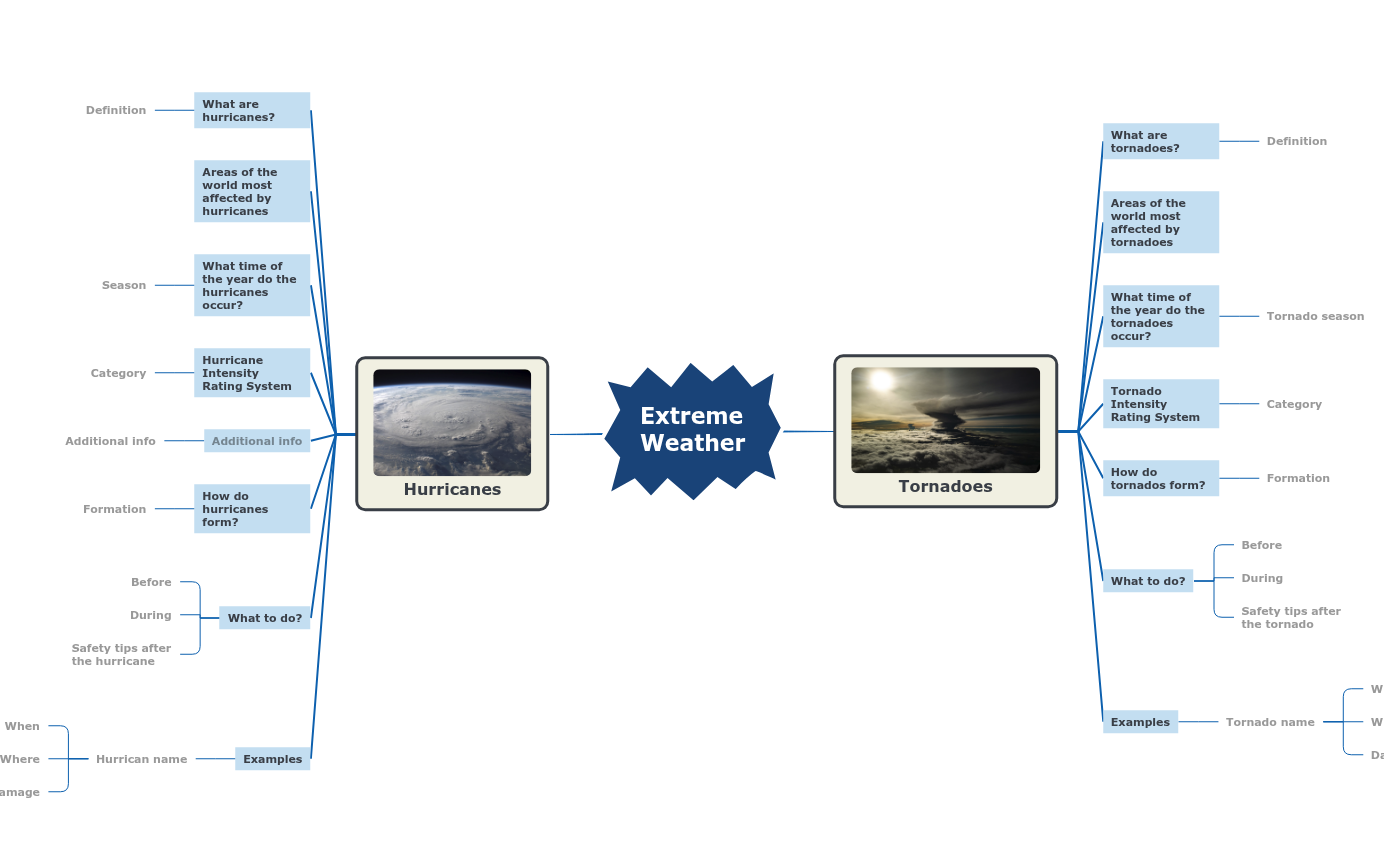
7 topicsWhat are tornadoes?
Tornadoes are local storms of short duration (this ranges between 5 and 10 minutes) formed of winds that rotate at very high speeds, usually in a counter-clockwise direction. A tornado's characteristics: Time of day: they usually occur in the afternoon (3 - 7 PM) Direction: usually from southwest to northeast Length of path: this is the distance it travels; the average is 4 miles, but it could also travel around 300 miles. Width of path: averages between 300 and 400 yards but tornadoes have cut paths a mile or more in width. Speed of travel: though speeds of 68 mph have been reported, the average speed is somewhere between 25 and 40 mph. Cloud: dark cumulonimbus (thunderstorm cloud) from which the funnel-shaped pendant extends to the ground. Precipitation: rain and hail before the tornado hits and heavy downpour to the side of the tornado's path. Sound: roaring, rushing noise.
Areas of the world most affected by tornadoes
Which are the areas/countries of the world hit most frequently or severely by tornadoes? Choose from the options below or add your own. North America Europe South Africa Philipppines Bangladesh New Zealand South America Canada Other
What time of the year do the tornadoes occur?
Tornadoes can occur almost all over the world, but US's unique geography makes it the ideal place for their development. Type in the tornado seasons in the United States, taking into account the Southeast and Northern Plains regions.
Tornado Intensity Rating System
The classification system for tornadoes is called The Fujita Scale (or F scale), and it's an F0 to F6 categorization of the tornado's intensity. Each category expresses the intensity in miles per hour. Example: category F0 (40–72 mph; includes damages to trees, chimneys, and billboards). Type in the other 5 categories.
How do tornados form?
Tornadoes are the most violent storms on Earth Watch the video then type in a short explanation of how the tornadoes are formed.
What to do?
Research on the emergency procedures and safety tips that can keep you safe before, during and after a hurricane. Type in several of them.
- Before — List several emergency procedures and safety tips that will prepare you for a tornado.
- During — List several emergency procedures and safety tips that will keep you safe during a tornado.
- Safety tips after the tornado — List several safety tips that will help you cope with the situation after the tornado has left your area.
Examples
Tornadoes that have been known throughout history
- Tornado name
- When: When did it take place? Type in the answer.
- Where: Where did it occur? Type in the name of the area that was affected.
- Damage: What were the damages caused by it? Type in the answer.