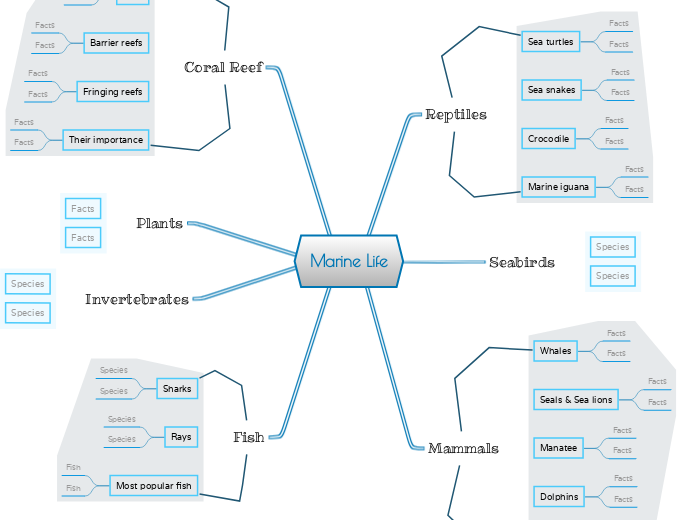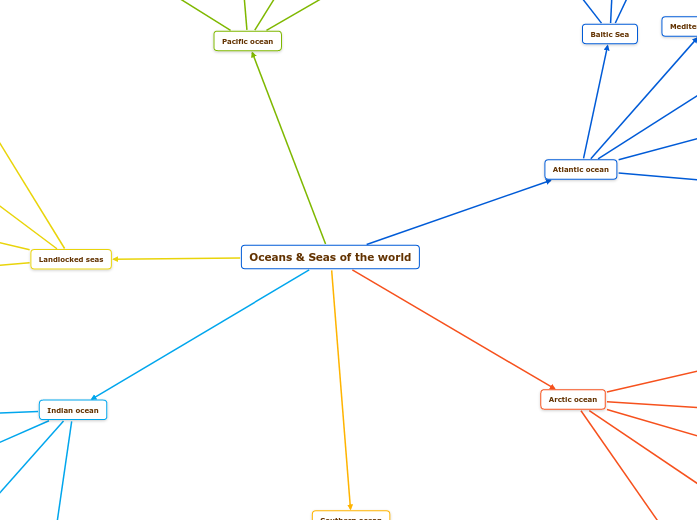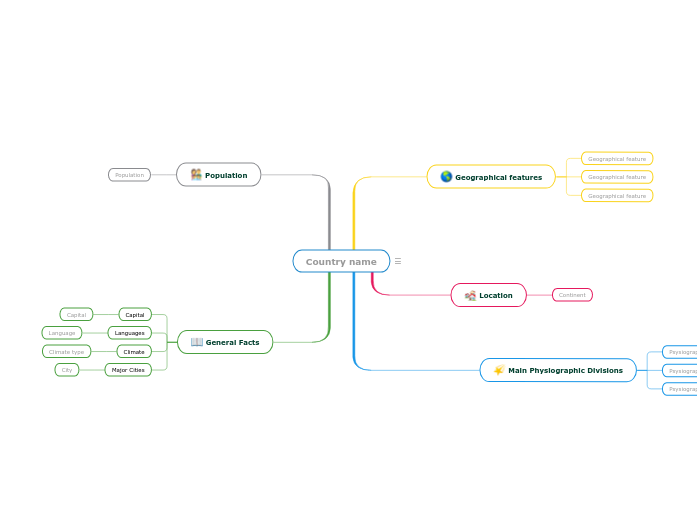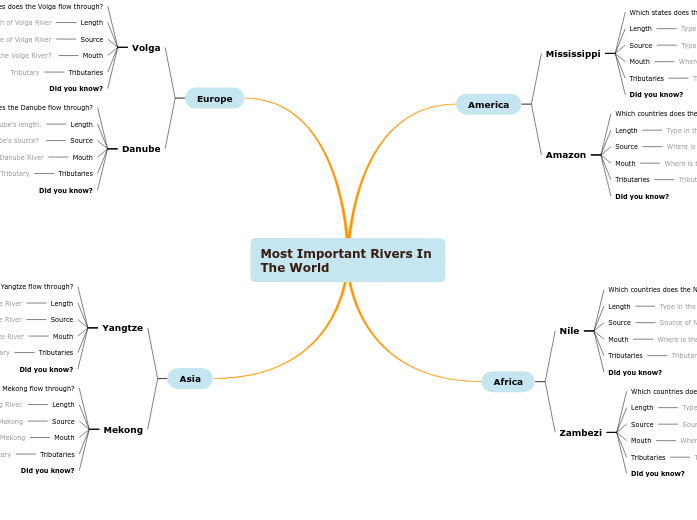
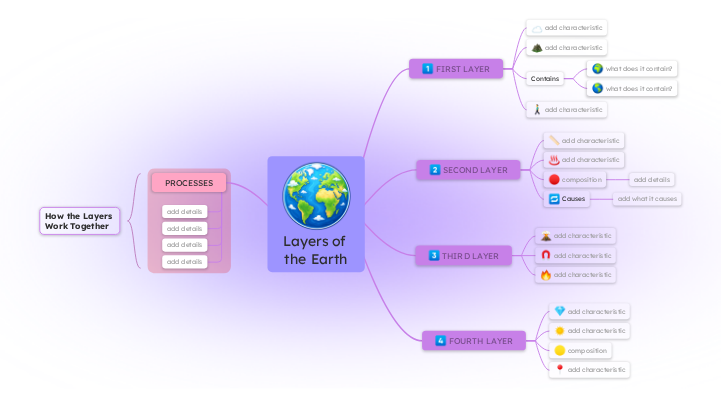
This interactive mind map template helps students learn about the layers of the Earth. Identify the four main layers, describe their characteristics and composition, and explore the processes that occur inside our planet. Use the interactive hints and suggestions to complete the mind map and test your knowledge of Earth's structure. Use this layers of the Earth template to learn how our planet is built, from the ground beneath our feet to its very center. The Earth has four main layers: Add details about each layer, such as its thickness, composition, temperature and state, to compare them and remember how they work together. Use this interactive template to learn about Earth's four main layers, from the surface to its center. Complete this section with processes connected to the Earth's layers. Replace each 'add details' placeholder with one short cause-and-effect statement. Use the suggestions for ideas, or add your own examples. Describe how heat from Earth's deep interior moves toward the outer layers. Describe the role of Earth's magnetic field, which is generated mainly by moving liquid metal in the outer core. Describe a process involving magma or volcanic activity. Describe one process driven by movement or heat within Earth. Express it as a short cause-and-effect statement. Choose the correct name for the fourth layer of the Earth from the options below. Describe the pressure deep inside Earth and how it affects this layer's physical state. Replace 'composition' with the materials found in this layer. You can add more details with Notes. Compare the temperature of this layer with the other layers. Describe the physical state and position of Earth's center. Choose the correct name for the third layer of the Earth from the options below. Add a temperature-related characteristic. Use a qualitative statement or a temperature range from your textbook. Describe an important effect produced by motion in this layer. Describe the main materials and physical state of this layer. Choose the correct name for Earth's second layer from the options below. Explain an effect of the mantle's slow movement. Add the consequence in the empty child topic. Name one effect of mantle movement on Earth's crust. You can elaborate using Notes. Replace 'composition' with a short phrase describing this layer's material and physical behavior. Use the child topic to add a more precise term or explanation. Add a detail about the layer's rock material or related molten material. Be precise: most of the mantle is solid rock, although some rock can partially melt to produce magma. Explain its temperature or how heat affects the rock. Describe this layer's size or thickness relative to the other layers. Choose the correct name for the first layer of the Earth from the options below. Add one more important characteristic, for example how this layer relates to living things. Identify what is found on this layer. Use the empty topics below to add separate examples; keep or remove examples according to your lesson. Enter another example of what the outer layer contains. You can add more topics if needed. Enter one example of what the outer layer contains, such as a landform. Write the answer directly in this topic. Describe the material and physical state of this layer. Describe how thick this layer is compared with the others. Keep your answer short and specific. Every Mindomo template opens with its structure already in place and a default shape that new topics inherit. Templates on a subject add descriptive topics and guiding notes where people usually get stuck; blank layouts leave the content to you. Edit it in the browser, switch it to a concept map, outline or Gantt chart without redrawing anything, and export it in more than twenty formats. See how mind map templates work, or browse the full gallery by category.Layers of the Earth
About this template
Layers of the Earth
How the Layers Work Together
Layers of the Earth
Replace each numbered layer placeholder with the correct layer name, then complete its characteristics, composition, and effects.
Use the suggested ideas within each branch when helpful, or write answers in your own words. Finish by explaining the processes connected to Earth's interior.
Add your lesson notes or an explanation here and link to a trusted Earth-science resource if needed.
Tip: The four numbered branches are fill-in topics. Type each layer name directly into its placeholder instead of adding new branches.PROCESSES
Add explanations or examples in Notes and attach a reliable science resource if useful.FOURTH LAYER
❗Only one answer is correct for this position.
Replace the placeholder with your choice, then add details about its characteristics, composition, and conditions in the subtopics.THIRD LAYER
❗Only one answer is correct for this position.
Replace the placeholder with your choice, then complete the subtopics with details about its materials, physical state, and properties.SECOND LAYER
❗Only one answer is correct for this position.
Replace the placeholder with your choice, then add more details about its characteristics, composition, and effects in the subtopics.Causes
add what it causes
composition
add details
FIRST LAYER
❗Only one answer is correct for this position.
Replace the placeholder with your choice, then use the subtopics to describe its characteristics and contents.Contains
what does it contain?
add characteristic
Why use a Mindomo mind map template?
-
Products
-
Uses
- General Uses
- Mind Maps for Education
- Mind Maps for Business
- Mind Maps for Personal Development
- Assistive Technology
- Team Collaboration
- Campaign briefs for marketers
- Client discovery workshops for consultants
- Onboarding journeys for HR & L&D
- Knowledge Management
- Team Skills Matrix
- Engagement Library
- Roles
- Marketers
- HR & L&D
- Consultants
- Project Management
- Marketing campaign planning
- Employee training rollouts
- Scope of Work
- Idea Organization
- Issue Trees
- Training Needs Analysis
- Mind Mapping Benefits
-
Solutions
- Guides
- Make Presentations with Mind Maps
- How to Learn with Mind Maps
- Plan and Organize with Mind Maps
- Prioritize Tasks with Mind Maps
- Take Notes with Mind Maps
- Real Customer Stories
- Scaling educational content for 11,000 doctors
- Team workflow: from trial to indispensable in two months
- 10 years without slides: rethinking architecture lectures
- Read all stories
-
Resources
- Learn the basics
- What is a Mind Map?
- How to Mind Map?
- What is a Concept Map?
- Benefits of Mind Mapping
- Guides & Support
- Video tutorials
- Help center
- Forum
- Examples & templates
- Top 29 Mind Map Examples
- Concept Map Templates
- How to Make a Gantt Chart
- Mindomo's Efficiency in Education
- Feature pages
- Education
- Teacher Assignments
- Work & Personal
- Desktop
- The Mindomo blog
- Pricing
- Log In
- Sign Up
- Dashboard
Mind Mapping Benefits
Why visual thinking makes recall and planning easier.
Learn the basics
Guides & Support
Examples & templates
Feature pages
 Blog
The Mindomo blog
Guides, examples and research on visual thinking.
Browse all articles