A top-down, answer-first storyline bridge connecting Issue Tree logic to Statement of Work deliverables before deck development. It translates key questions and hypotheses into defined workstreams, outputs, and a clear presentation structure. This storyline answer-first template helps consultants, strategists, analysts, and business teams structure clear, persuasive communication by starting with the key answer and supporting it with logically organized arguments and evidence. It provides a visual framework for defining the main message, building supporting points, connecting insights, and shaping a coherent storyline before creating a presentation or report. Use this template to clarify the core recommendation, organize supporting arguments, validate the logic of your story, identify evidence gaps, and ensure each section contributes directly to the main conclusion. It is especially useful for executive presentations, consulting deliverables, strategic recommendations, and other situations where concise, top-down communication is essential. Use this bridge template to turn an engagement question into an answer-first storyline that is both logically sufficient and contractually grounded. Start with the one-sentence answer, derive three mutually reinforcing arguments from the Issue Tree, and test that each argument lands in a scoped Statement of Work deliverable before the deck is written. An argument that cannot attach to a scoped deliverable is either out of scope or a potential change order. Define the proposed next step. List the inputs needed to proceed. Name the owner and first-30-day plan. Describe the first action. Review likely concerns. Enter the point to acknowledge. Enter the evidence-based response. Enter the main objection. Develop the third supporting argument. State why Argument 3 matters. Name the scoped deliverable for Argument 3. Name the issue-tree branch answered by Argument 3. List the evidence for Argument 3. Write the claim for Argument 3. Develop the second supporting argument. State why Argument 2 matters. Name the scoped deliverable for Argument 2. Name the issue-tree branch answered by Argument 2. List the evidence for Argument 2. Write the claim for Argument 2. Develop the first supporting argument. State why Argument 1 matters. Name the scoped deliverable for Argument 1. Name the issue-tree branch answered by Argument 1. List the evidence for Argument 1. Write the claim for Argument 1. Capture the change that created urgency. Enter the consequence of inaction. Enter the event that created urgency. Define the engagement question. List the requirements for a complete answer. Enter the Issue Tree root question. Les cartes mentales vous aident à faire un brainstorming, à établir des relations entre les concepts, à organiser et à générer des idées. Cependant, les modèles de cartes mentales offrent un moyen plus facile de commencer, car il s'agit de cadres qui contiennent des informations sur un sujet spécifique avec des instructions d'orientation. Par essence, les modèles de cartes mentales assurent la structure qui combine tous les éléments d'un sujet spécifique et servent de point de départ à votre carte mentale personnelle. Ils constituent une ressource qui offre une solution pratique pour créer une carte heuristique sur un sujet particulier, que ce soit dans le domaine des affaires ou de l'éducation. Mindomo vous propose des modèles de cartes mentales intelligentes qui vous permettent de fonctionner et de penser sans effort. Vous pouvez choisir parmi une variété de cartes mentales vierges provenant des comptes professionnels ou éducatifs de Mindomo, ou vous pouvez créer vos propres modèles de cartes heuristiques à partir de zéro. Toute carte heuristique peut être transformée en modèle de carte heuristique en ajoutant des notes d'orientation à l'un de ses sujets.Storyline Answer-First Template
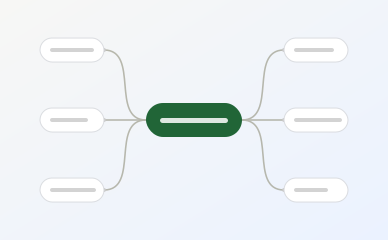
À propos de ce modèle
Storyline answer-first template
Answer-First Map
The recommendation
What we need from the client
Owner and first 30 days
Action — [what to do first]
Objections
What we concede
Our answer — [evidence that settles it]
Objection — [what they will say]
Argument 3
Argument 2
Argument 1
So-what — [what the client should do about it]
Lands in — [which SOW deliverable carries this]
Answers — [which issue tree branch this closes]
Evidence — [exhibit, source, date]
Claim — [assertive headline, not a topic]
What changed
Cost of doing nothing
Trigger — [the event that made this urgent]
The question to answer
What a good answer must include
From the issue tree root question
Pourquoi utiliser un modèle de carte mentale Mindomo ?
Un modèle a plusieurs fonctionnalités :
-
Produits
-
Usages
- Usages généraux
- Cartes mentales pour l'éducation
- Cartes mentales pour les entreprises
- Cartes mentales pour le développement personnel
- Technologie d'assistance
- Collaboration en équipe
- Briefs de campagne pour les spécialistes marketing
- Ateliers de découverte client pour les consultants
- Parcours d'intégration pour les RH et L&D
- Gestion des connaissances
- Matrice de compétences d'équipe
- Bibliothèque de missions
- Rôles
- Spécialistes marketing
- RH et L&D
- Consultants
- Gestion de projet
- Planification de campagne marketing
- Déploiements de formation des employés
- Périmètre des prestations
- Organisation des idées
- Arbres de problèmes
- Analyse des besoins de formation
- Avantages des cartes mentales
-
Solutions
- Guides
- Créer des présentations avec des cartes mentales
- Comment apprendre avec des cartes mentales
- Planifier et organiser avec des cartes mentales
- Comment prioriser les tâches avec des cartes mentales
- Comment prendre des notes avec des cartes mentales
- Témoignages clients
- Développer du contenu éducatif pour 11 000 médecins
- Workflow d'équipe : de l'essai à l'indispensable en deux mois
- 10 ans sans diapositives : repenser les cours d'architecture
- Lire toutes les histoires
-
Ressources
- Les bases
- Top 21 Exemples de cartes mentales
- Qu'est-ce qu'une carte mentale ?
- Logiciel de diagramme de Gantt
- Modèles de carte conceptuelle
- Guides & Support
- Tutoriels vidéo
- Centre d'aide
- Forum
- Exemples et modèles
- Comment faire une carte mentale ?
- Qu'est-ce qu'une carte conceptuelle ?
- Comment créer un diagramme de Gantt
- Pages de fonctionnalités
- Éducation
- Devoirs pour enseignants
- Travail & Personnel
- Bureau
- Le blog Mindomo
- Tarifs
- Connexion
- Inscription
- Tableau de bord
Créer
- Générateur de Cartes Mentales IA Transformez une invite ou un document en diagramme en quelques secondes.
- Créateur de Listes en ligne Rédigez une liste structurée et visualisez-la sous forme de carte.
- Logiciel de Diagrammes de Gantt en ligne Transformez vos sujets en tâches et visualisez tout le calendrier.
 Modèles
 de Cartes Mentales Vierges
Partez d'une carte qui fonctionne déjà, puis personnalisez-la.
Gestion des connaissances
Avantages des cartes mentales
Pourquoi la pensée visuelle facilite la mémorisation et la planification.
Les bases
Guides & Support
Exemples et modèles
Pages de fonctionnalités
 Blog
Le blog Mindomo
Guides, exemples et recherches sur la pensée visuelle.
Voir tous les articles