
How to use SWOT analysis in strategic management

Interactive map · How to use SWOT analysis in strategic management
Mind map: How to use SWOT analysis in strategic management

How to use SWOT analysis in strategic management

Free with a Mindomo account. Opens your own copy in the editor.

Understand the implications of your SWOT analysis, and identify the strategic steps that will minimize weaknesses, minimize threats, maximize strengths and maximize opportunities.

Free with a Mindomo account. Opens your own copy in the editor.

About this template

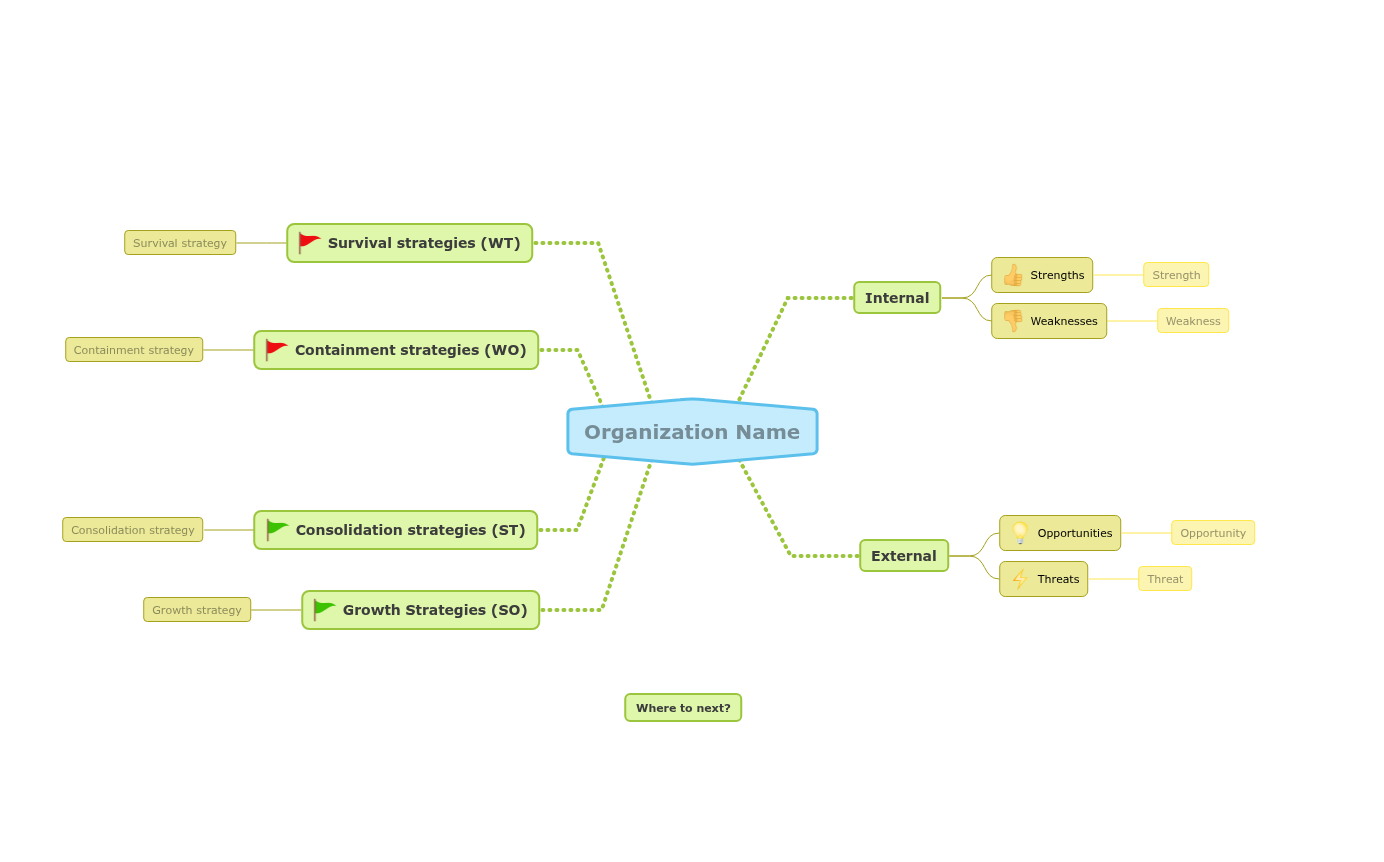
How to use SWOT analysis in strategic management? Begin by writing down the name of the company that is the subject of your analysis. Identify the internal strengths and weaknesses such as the people, their skills, the equipment, the brand reputation and partnerships, and the external opportunities and threats like social trends, new technologies, or strong competitors, then rank them by the significance they have for the company.

Examine and analyze the strengths and come up with a growth strategy, which allows you to reach a higher level of market control than you have at present.

Afterwards assess the strengths and compare them against the threats to find a good consolidation strategy that will help integrate all the necessary factors for the smooth running of your business.

Apply the same method with the weaknesses you identified: evaluate them against the opportunities to establish some containment strategies and review them against the threats to find survival strategies such as improving customer satisfaction.

As priorities and market trends change, you can always revisit this mind map template to modify the SWOT elements and brainstorm other strategies.

What’s inside this template

How to use SWOT analysis in strategic management: what the map covers

Central topic

Organization Name

Enter your organization name Type in the organization or area that is the subject of this analysis. You might find it helpful to add the date for reference so that you can review changes at a later date.

Internal

2 topics

Strengths

  • Strength — Add an internal strength Examples: good people, skills, location, technology, equipment, specialized knowledge, brand reputation, proven abilities, financial resources, partnerships. Rate the importance of this strength by clicking one of the icons below: Critical could not operate without it Helpful it makes things go better Bonus nice to have, but could continue without it

Weaknesses

  • Weakness — Add an internal weakness that is negatively affecting success. Examples: under-staffing, lack of skills, unreliable or inefficient equipment, unhappy customers, unhappy staff, missed deadlines. Rate the importance of this weakness by clicking one of the icons below: Critical it regularly causes real problems Survivable we find ways to work around it Minor it would be nice if we fixed it
External

2 topics

Opportunities

  • Opportunity — Add an external opportunity that you could take advantage of. Examples include social or business trends, fashions, changes in legislation, new technologies, innovations, weak competitors. Rate the importance of this opportunity by clicking one of the icons below: Strategic- success here would take the organization nearer to its goals Possible - we could do this, but it would be a different direction Maybe - we might do this if we cannot find anything else

Threats

  • Threat — Add an external threat that might negatively impact your organization. Examples include strong competitors, negative market trends, technologies becoming obsolete, new disruptive technologies. Rate the importance of this threat: Critical - could affect the survival of the organization Major - would disrupt operations and require recovery Minor - would cause a few problems that we can handle or adapt to

Survival strategies (WT)

1 topic

Survival strategy

Add a survival strategy Review each of the highest-ranked weaknesses facing your organization, and compare them with each of the highest-ranked threats. Are they connected in some way? Is this weakness a threat? Could the impact of a threat get worse if the weakness gets worse? For example, if a strong competitor is a threat, and unhappy customers are a weakness, then your customers might simply move to your competitor. A survival strategy would be to work on improving customer satisfaction.

Containment strategies (WO)

1 topic

Containment strategy

Add a containment strategy Review each of the highest-ranked weaknesses facing your organization, and compare them with each of the highest-ranked opportunities. Are they connected in some way? Is the weakness preventing you from taking advantage of an opportunity? If the weakness gets worse, does this push the opportunity further away? For example, if there is unmet demand in the market, but you have old and slow production equipment, then you cannot take advantage of this opportunity. A containment strategy would be to improve capacity with newer equipment.

Consolidation strategies (ST)

1 topic

Consolidation strategy

Add a consolidation strategy Review each of the highest-ranked strengths facing your organization, and compare them with each of the highest-ranked threats. Are they connected in some way? Is a strength helping to protect you from a threat? Could the impact of a threat increase if you do not maintain this strength? For example, if you have recognized specialist knowledge that gives you an advantage, but there is a threat that new technology could decrease your market, then it would make sense to develop the same level of specialist knowledge in new technologies.

Growth Strategies (SO)

1 topic

Growth strategy

Add a growth strategy Review each of the highest-ranked strengths facing your organization'''. Are they connected in some way? Is the strength helping to take advantage of an opportunity? If the strength is not maintained, does this reduce the chances of success with an opportunity? For example, if your product performs well, and new legislation is going to raise questions about your competitor's products, then you could maximize this situation by prioritizing your own product performance.

Where to next?

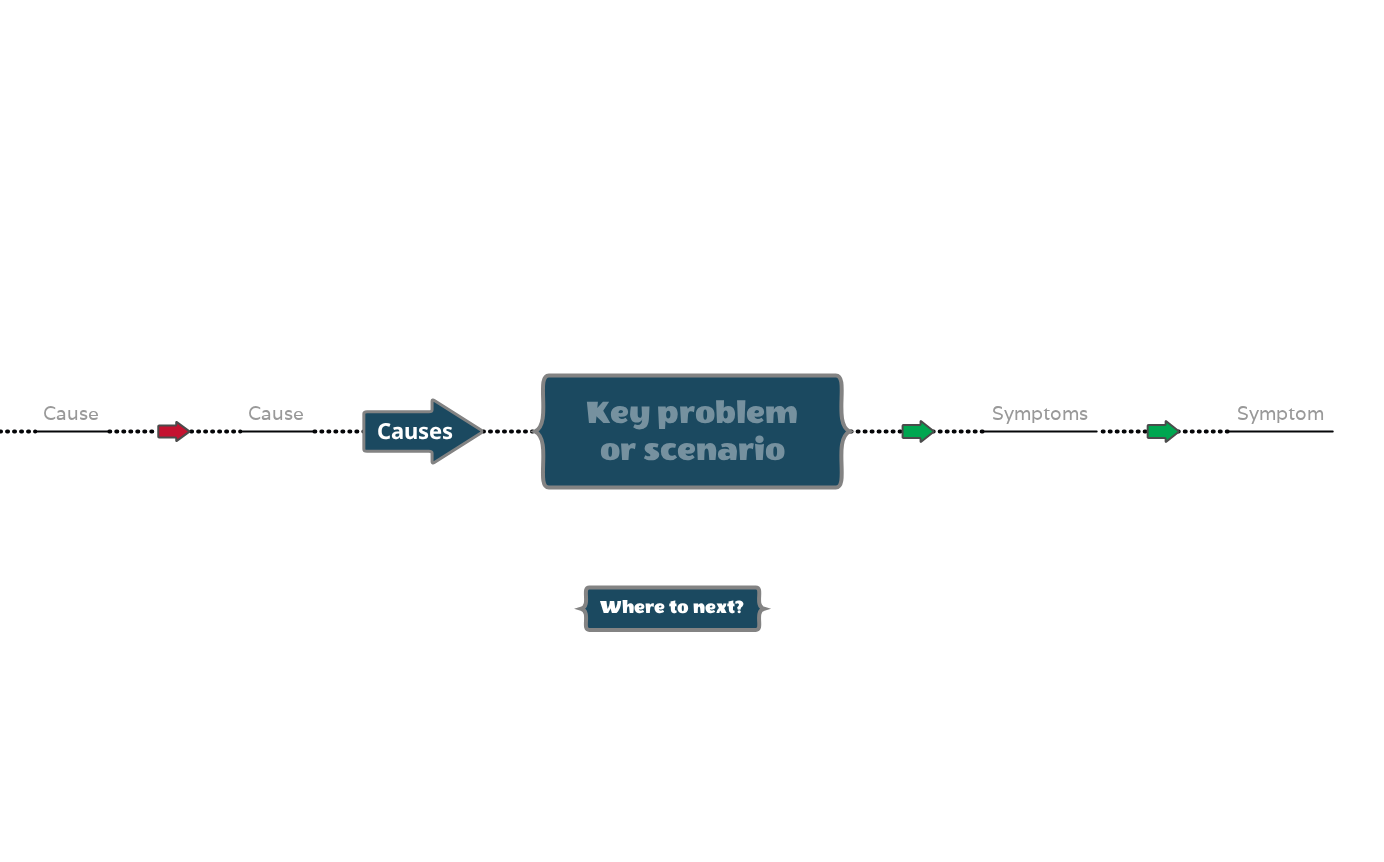
Where to next? Now that you have completed your SWOT analysis and strategy, where to next? You can return to this map to change SWOT elements or change their priorities You can review the strategies to gain agreement and turn them into plans & actions Do you have enough strengths? What is missing? Ensure that these gaps are listed as weaknesses You can examine the most important weaknesses and threats in detail, and use the map to further break them down into root causes

How to use it

  1. 1

    Open the template

    Click “Use this template” and sign in with a free account.

  2. 2

    Make it yours

    Replace the topics and fill in the notes.

  3. 3

    Share it

    Share, present or export it, or switch it to an outline or Gantt view.